
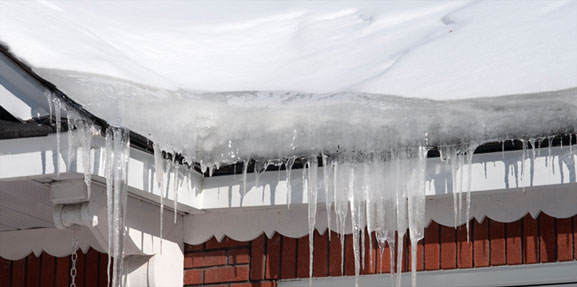
Ice Dams, Snow Loads & Why You Should Stay Off Your Roof
If timing truly is everything, then winter in New England makes this the perfect time to talk about snow, ice dams, and the one thing we beg homeowners not to do every year: climb onto their roofs with a shovel and a dream.
Every winter starts the same way. January teases us with mild temperatures and everyone starts saying, “Wow, this winter hasn’t been that bad at all.” Then Mother Nature remembers where we live and decides to unload snow, sleet, freezing rain, and enough wind to make your gutters question their career choices.
Along with all that snow comes one of the most common winter roofing headaches: ice dams.
What Exactly Is an Ice Dam?
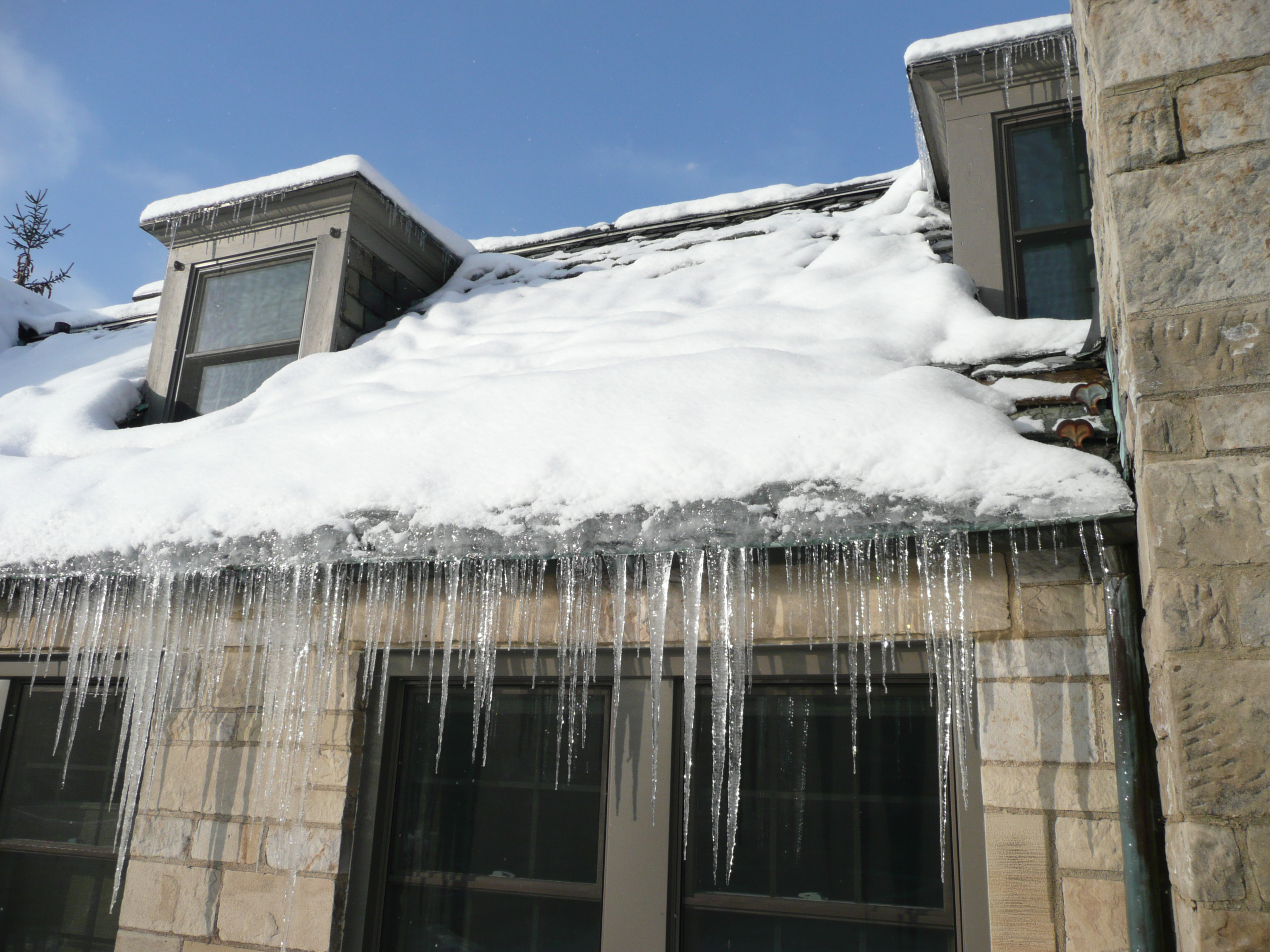
An ice dam is simply a layer of ice that forms along the edge of your roof, preventing melting snow from draining properly. Once that water has nowhere to go, it backs up beneath your shingles and eventually finds its way into your home—usually through ceilings, walls, and insulation.
The result? Leaks, water damage, stained ceilings, and a whole lot of frustration.
The old saying “an ounce of prevention is worth a pound of cure” has never been more accurate than when discussing ice dams.
The Real Cause of Ice Dams
Contrary to popular belief, snow itself is not usually the problem. The issue begins when your attic becomes warmer than it should be.
When heat escapes into the attic, it warms the roof surface and melts the snow sitting on top of it. That melted snow runs down toward the colder roof edges where it refreezes, creating the ice dam. As more melting occurs, the water gets trapped behind the ice and starts creeping underneath the shingles.
That’s why the real solution to ice dams is creating and maintaining a cold roof.
Prevention: Your Best Defense
The best way to prevent ice dams is proper ventilation and insulation.
Ridge vents and soffit vents help circulate cold outside air through your attic, preventing excess heat buildup. A properly ventilated roof allows air to move smoothly so the snow melts evenly instead of refreezing at the edges.
Another major preventative measure is snow removal—especially if you notice large icicles forming along your gutters.
But before you channel your inner mountain climber, let’s make something very clear:
Don’t Be a Hero
Every winter countless homeowners end up injured because they decided to crawl out a window with a shovel and attack their roof like they’re storming Normandy.
Please don’t.
Snow-covered roofs are slippery, dangerous, and incredibly deceptive. In many cases, homeowners panic unnecessarily when their roof is actually handling the snow load just fine.
If you’re concerned about the weight of the snow on your roof, the safest option is always to call a professional.
Know Your Snow
Here’s a secret many savvy homeowners already know: not all snow weighs the same.
Dry, fluffy snow is relatively light. Wet, heavy snow is an entirely different animal. Six inches of wet snow can weigh more than several feet of dry powder.
So don’t judge your roof’s snow load simply by how much snow you can see.
Another easy warning sign? Check your interior doors. If doors suddenly begin sticking or become difficult to open and close, your roof may be under excessive stress from snow accumulation. You may also notice cracking or chipping in the drywall above door frames.
If You Want to Remove Snow Yourself
If you own a one-story home such as a ranch or bungalow, your best bet is investing in a snow rake.
Available at most hardware stores, snow rakes allow you to remove snow safely from ground level without ever stepping foot on the roof. And remember—you do not need to remove every last inch of snow. You only need to reduce the load enough to relieve stress and prevent ice dam formation.
Again: the rake stays on the ground. You stay on the ground. Everyone wins.
Already Have an Ice Dam? Here’s What You Can Do
If you’ve already moved beyond prevention and are dealing with an active leak, there are a few temporary remedies you can try while waiting for professional help.
One surprisingly effective option is placing a box fan in the attic aimed directly at the leak area. The cold air helps refreeze the melting water and can temporarily stop the leaking process.
Another solution—which admittedly sounds a little ridiculous but actually works—involves panty hose.
Yes. Panty hose.
Fill a pair with rock salt and lay it perpendicular across the ice dam so the end hangs over the gutter. The salt gradually melts a channel through the ice, allowing trapped water to escape safely.
Will your neighbors wonder why your roof is decorated with ladies’ hosiery? Absolutely.
Will it help solve the problem? Also yes.
Who ever said science can’t be fun?
Is Your Roof Winter-Ready?
Winter roofing problems are stressful enough without risking your safety trying to become a weekend snow-removal warrior. Proper ventilation, insulation, and safe snow management go a long way toward preventing costly damage from ice dams and excessive snow loads.
And if you’re unsure whether your roof is in trouble, call a professional before grabbing a ladder.
As always, we’re here to answer any questions regarding your roofing needs and help you weather whatever New England decides to throw at us next.
Reach out to RIHI at 401-739-1001 to learn more about how our Protec roofing system is designed to protect your home from the worst winter has to offer.
As always, we’re here awaiting any questions and concerns pertaining to your roofing needs. Reach out to 401-739-1001 and we’ll be happy to share how our Protec roofing system will help you in the fight against this inclement weather through which we’ve all suffered as of late.